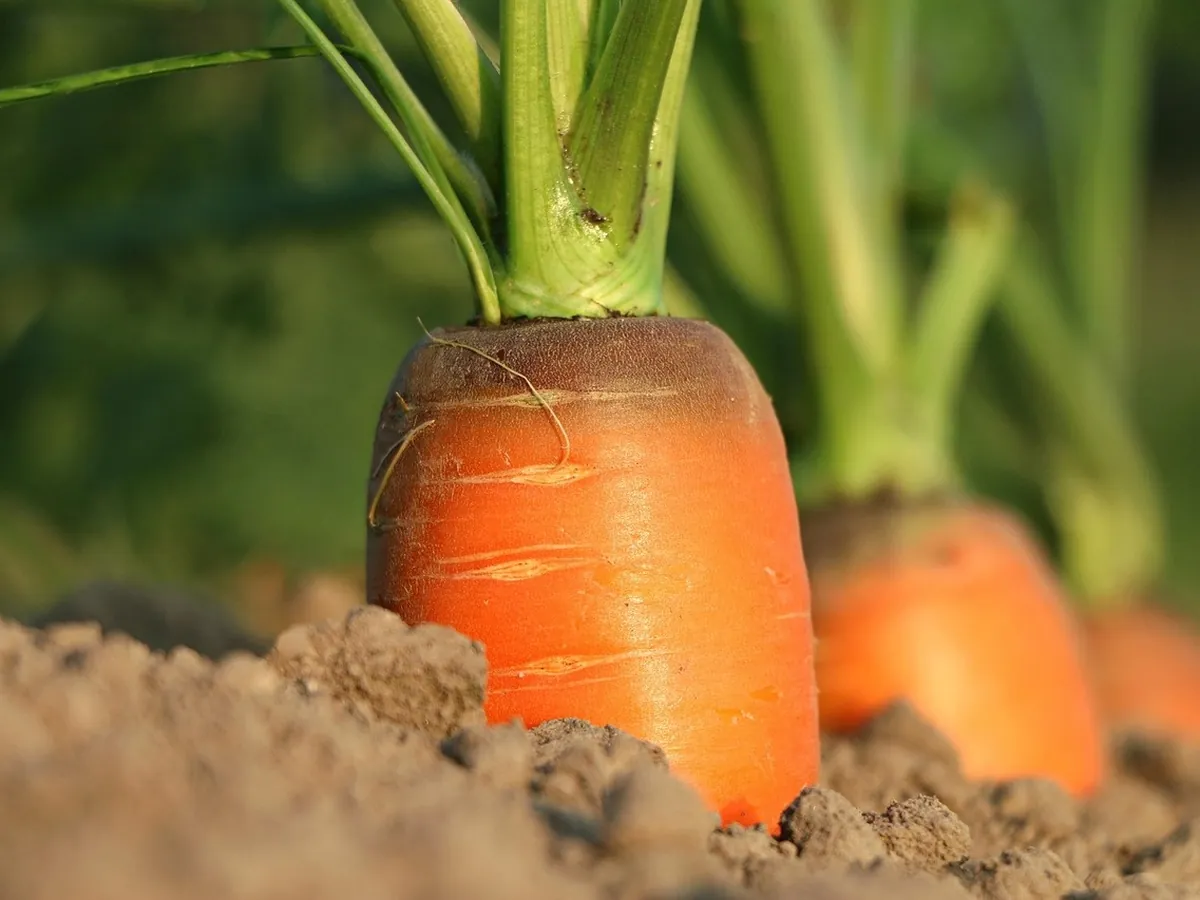
Carrot at a glance
| Botanical name | Daucus carota subsp. sativus |
|---|---|
| Family | Apiaceae |
| Other names | garden carrot |
| Plant type | Vegetable; biennial grown as an annual |
| Size | Leaves about 1 foot tall |
| Light | Full sun (6 or more hours of direct sun); Part shade (2 to 6 hours of sun) |
| Water | Keep the top inch of soil moist until seeds sprout, then water evenly. |
| Soil | Loose, deep, stone-free soil; avoid fresh manure. |
| USDA hardiness zones | Grown as a cool-season crop in every zone. |
| USDA PLANTS symbol | DACA6 |
When to plant carrot
Sow seeds outdoors 0 to 2 weeks before your last spring frost. Sow again in summer for a fall crop.
Turn these into real dates for your area with the planting calendar.
How to grow carrot
- Loosen the soil deeply and remove stones.
- Sow seeds very shallowly; they are tiny.
- Keep the seedbed moist; carrots can take two weeks or more to sprout.
- Thin seedlings so roots have room to swell.
- Water evenly and harvest when roots reach full size for the variety.
Water and soil
Water: Keep the top inch of soil moist until seeds sprout, then water evenly.
Soil: Loose, deep, stone-free soil; avoid fresh manure.
Light: Full sun (6 or more hours of direct sun); Part shade (2 to 6 hours of sun).
Common problems
- Forked or twisted roots
- Caused by stones, compacted soil or fresh manure.
- Poor germination
- Usually the seedbed dried out. Keep it moist, or cover lightly with burlap until sprouts appear.
- Green shoulders
- Exposed tops turn green; cover them with soil.
Is carrot safe for cats and dogs?
Non-toxic
Non-toxic
The ASPCA lists Carrot Flower (Daucus carota var. sativa) as non-toxic to cats and non-toxic to dogs. ASPCA entry.
NC State Extension rates its poison severity for people and animals as low.
If a pet chews a plant and you are worried, call your vet or the ASPCA Animal Poison Control Center (888-426-4435; a fee may apply). For people, call Poison Help at 1-800-222-1222. In an emergency, call 911.
Can you eat carrot?
The roots are eaten raw or cooked. The leaves are also edible.
Carrot questions
When should I plant carrots?
Sow them outdoors 0 to 2 weeks before your average last spring frost, and again in summer for fall.
Are carrots safe for dogs and cats?
The ASPCA lists the carrot plant (Daucus carota var. sativa) as non-toxic to cats and dogs.
Why are my carrots short and forked?
Heavy, stony or compacted soil makes roots fork. Loosen the soil deeply or grow short varieties.
Sources
- NC State Extension Gardener Plant Toolbox: Daucus carota subsp. sativus (size, light, soil, zones, poison rating)
- USDA PLANTS Database profile: Daucus carota L. (accepted name)
- ASPCA: Carrot Flower (pet toxicity)
- ASPCA Animal Poison Control: plants toxic and non-toxic to cats
- ASPCA Animal Poison Control: plants toxic and non-toxic to dogs
- Colorado State University Extension: Vegetable Planting Guide
Written in our own words from the sources above. See our editorial policy. Spotted a mistake? Tell us.