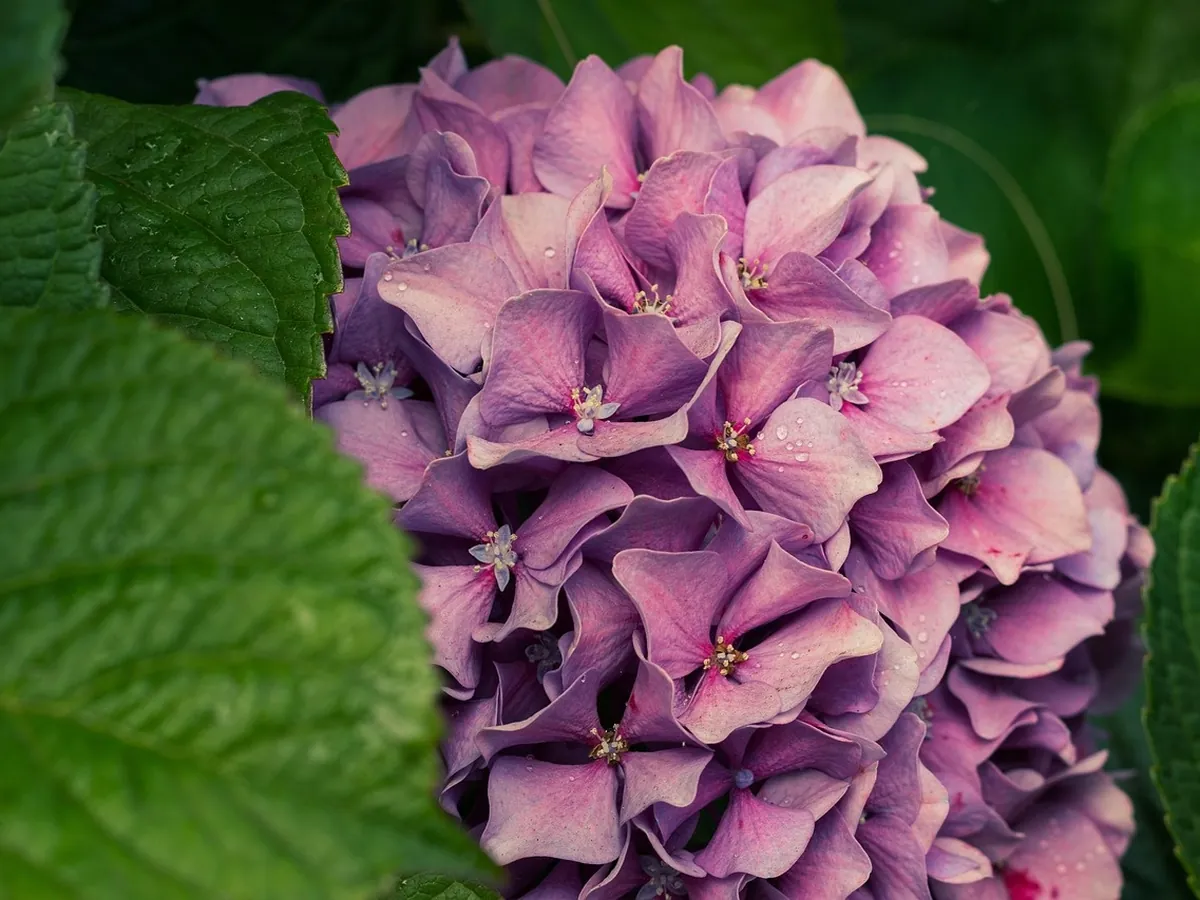
Hydrangea at a glance
| Botanical name | Hydrangea macrophylla |
|---|---|
| Family | Hydrangeaceae |
| Other names | bigleaf hydrangea, mophead, lacecap |
| Plant type | Shrub; deciduous shrub |
| Size | 3 to 6 feet tall and wide |
| Light | Part shade (2 to 6 hours of sun); Shade (under 2 hours of direct sun) |
| Water | Keep soil evenly moist; the big leaves wilt quickly in afternoon heat. |
| Soil | Moist, well-drained soil rich in organic matter. |
| USDA hardiness zones | Hardy in zones 6 to 11. In cold areas winter can damage the flower buds. |
| USDA PLANTS symbol | HYMA7 |
When to plant hydrangea
Plant in spring or early fall so roots grow before summer heat or winter cold.
Turn these into real dates for your area with the planting calendar.
How to grow hydrangea
- Plant where it gets morning sun and afternoon shade.
- Dig a wide hole, mix in compost and set the plant at its pot depth.
- Water deeply and spread mulch to keep roots cool.
- Water during dry spells, especially in the first two summers.
- Many bigleaf types bloom on old wood: prune right after flowering, not in fall or spring.
Water and soil
Water: Keep soil evenly moist; the big leaves wilt quickly in afternoon heat.
Soil: Moist, well-drained soil rich in organic matter.
Light: Part shade (2 to 6 hours of sun); Shade (under 2 hours of direct sun).
Common problems
- No flowers
- Often caused by pruning at the wrong time or winter damage to buds.
- Wilting in the afternoon
- Normal on hot days if leaves recover by evening; if not, water more deeply.
Is hydrangea safe for cats and dogs?
Toxic
Toxic
The ASPCA lists Hydrangea (Hydrangea arborescens) as toxic to cats and toxic to dogs. Signs it lists include: vomiting, depression, diarrhea. ASPCA entry.
NC State Extension rates its poison severity for people and animals as low.
If a pet chews a plant and you are worried, call your vet or the ASPCA Animal Poison Control Center (888-426-4435; a fee may apply). For people, call Poison Help at 1-800-222-1222. In an emergency, call 911.
Can you eat hydrangea?
Not edible.
Hydrangea questions
How do I make my hydrangea blue?
Bigleaf hydrangea flowers tend to be blue in acid soil and pink in alkaline soil. Test your soil first; changing pH is slow and works better on some varieties than others.
Are hydrangeas poisonous to dogs and cats?
Yes. The ASPCA lists hydrangea as toxic to cats and dogs, usually causing vomiting and diarrhea.
When should I prune bigleaf hydrangea?
Many varieties flower on last year's stems, so prune right after they bloom. Pruning in fall or spring can remove next year's flowers.
Sources
- NC State Extension Gardener Plant Toolbox: Hydrangea macrophylla (size, light, soil, zones, poison rating)
- USDA PLANTS Database profile: Hydrangea macrophylla (Thunb.) Ser. (accepted name)
- ASPCA: Hydrangea (pet toxicity)
- ASPCA Animal Poison Control: plants toxic and non-toxic to cats
- ASPCA Animal Poison Control: plants toxic and non-toxic to dogs
Written in our own words from the sources above. See our editorial policy. Spotted a mistake? Tell us.