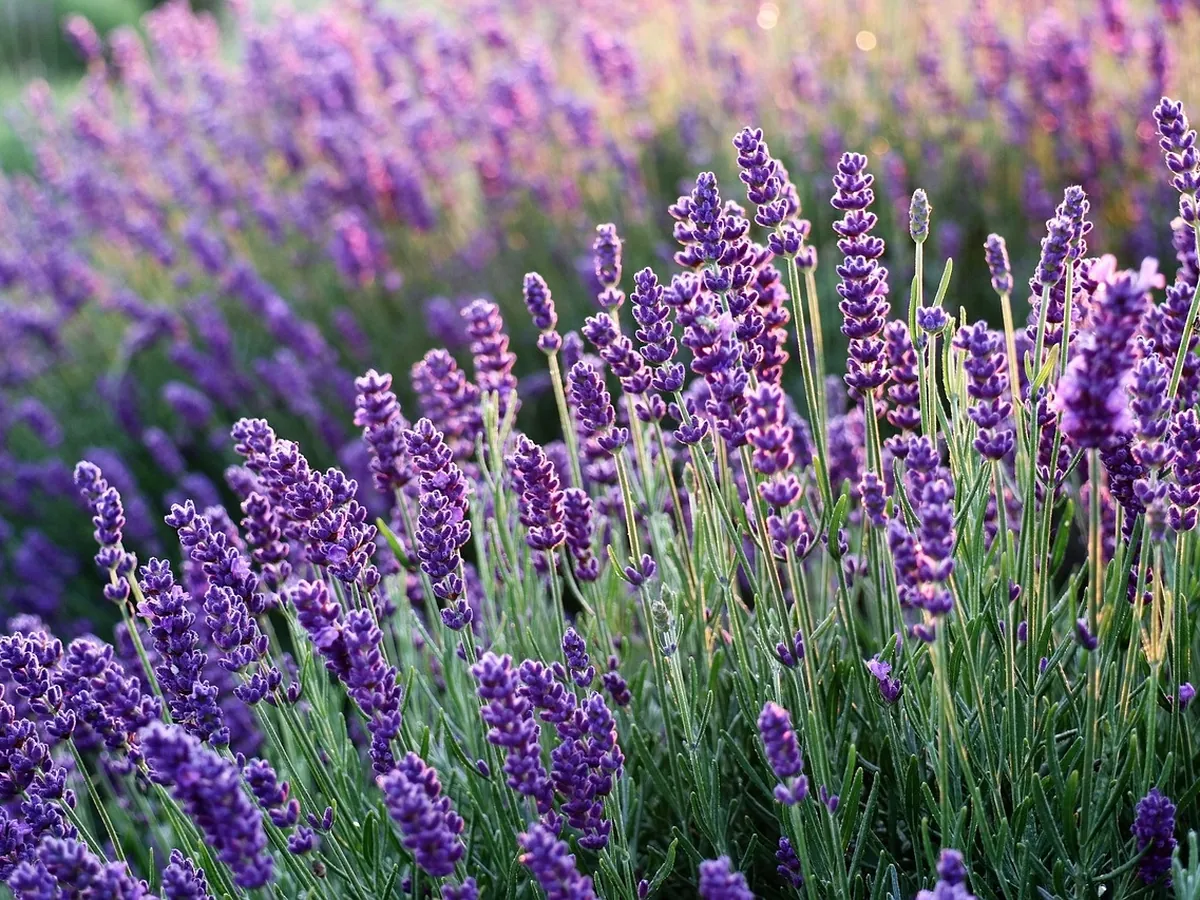
Lavender at a glance
| Botanical name | Lavandula angustifolia |
|---|---|
| Family | Lamiaceae |
| Other names | English lavender, common lavender |
| Plant type | Herb; woody perennial herb |
| Size | 1 to 2 feet tall, 2 to 3 feet wide |
| Light | Full sun (6 or more hours of direct sun) |
| Water | Water new plants until they root in, then only in long dry spells. Soggy soil rots the roots. |
| Soil | Sharply drained, lean soil; neutral to alkaline. Avoid heavy, wet clay. |
| USDA hardiness zones | Hardy in zones 5 to 9. |
| USDA PLANTS symbol | LAAN81 |
When to plant lavender
Plant in spring after the last frost so roots settle in before winter.
Turn these into real dates for your area with the planting calendar.
How to grow lavender
- Pick the sunniest, best-drained spot you have, or a raised bed or pot.
- Plant at the same depth as the pot; do not bury the crown.
- Use gravel or nothing as mulch; heavy wet mulch around the crown can cause rot.
- Water while the plant gets established, then cut back.
- Shear lightly after flowering to keep the plant compact.
- Avoid cutting into old bare wood, which may not resprout.
Water and soil
Water: Water new plants until they root in, then only in long dry spells. Soggy soil rots the roots.
Soil: Sharply drained, lean soil; neutral to alkaline. Avoid heavy, wet clay.
Light: Full sun (6 or more hours of direct sun).
Common problems
- Root rot
- Plants turn gray and collapse in wet soil. Improve drainage or grow in a raised bed or pot.
- Woody, open center
- Older plants get leggy. Light shearing every year after bloom slows this.
Is lavender safe for cats and dogs?
Toxic
Toxic
The ASPCA lists Lavender (Lavendula angustifolia) as toxic to cats and toxic to dogs. Signs it lists include: nausea, vomiting , poor appetite. ASPCA entry.
NC State Extension rates its poison severity for people and animals as low.
If a pet chews a plant and you are worried, call your vet or the ASPCA Animal Poison Control Center (888-426-4435; a fee may apply). For people, call Poison Help at 1-800-222-1222. In an emergency, call 911.
Can you eat lavender?
English lavender flowers are used sparingly to flavor food and drinks.
Lavender questions
Is lavender toxic to cats and dogs?
Yes. The ASPCA lists lavender as toxic to cats and dogs; it can cause nausea and vomiting. Keep pets from chewing the plant and call your vet if they do.
Why is my lavender dying?
The most common cause is too much water or poorly drained soil. Lavender wants full sun and soil that dries out between waterings.
Does lavender come back every year?
English lavender is a perennial in zones 5 to 9, so it returns each year in well-drained soil.
Sources
- NC State Extension Gardener Plant Toolbox: Lavandula angustifolia (size, light, soil, zones, poison rating)
- USDA PLANTS Database profile: Lavandula angustifolia Mill. (accepted name)
- ASPCA: Lavender (pet toxicity)
- ASPCA Animal Poison Control: plants toxic and non-toxic to cats
- ASPCA Animal Poison Control: plants toxic and non-toxic to dogs
Written in our own words from the sources above. See our editorial policy. Spotted a mistake? Tell us.