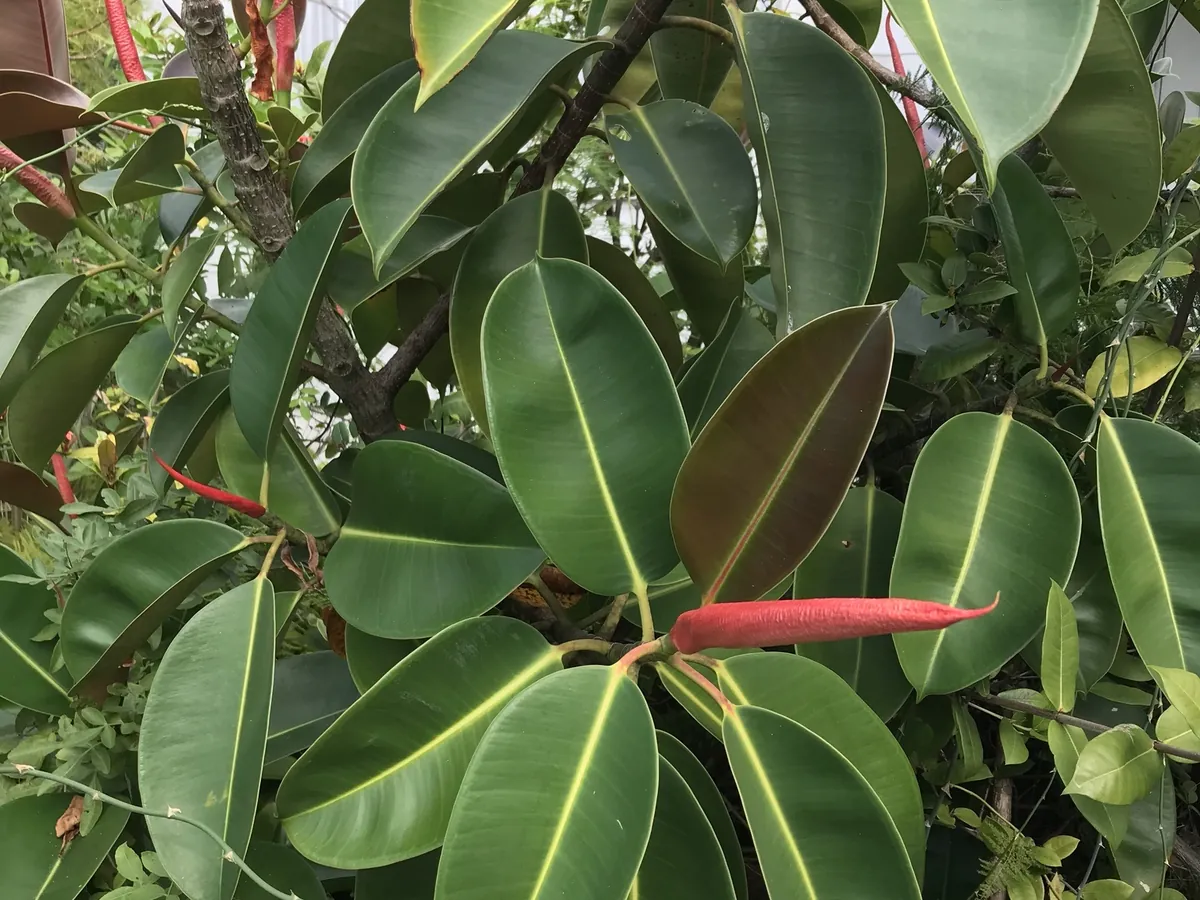
Rubber Plant at a glance
| Botanical name | Ficus elastica |
|---|---|
| Family | Moraceae |
| Other names | rubber tree, Ficus elastica |
| Plant type | Houseplant; evergreen tree (houseplant) |
| Size | Usually 3 to 10 feet tall indoors (huge tree in the tropics) |
| Light | Part shade (2 to 6 hours of sun) |
| Water | Water when the top couple of inches of soil are dry. |
| Soil | Well-drained indoor potting mix. |
| USDA hardiness zones | Outdoors only in zones 9 to 12; elsewhere a houseplant. |
| USDA PLANTS symbol | FIEL |
When to plant rubber plant
Repot or prune in spring.
How to grow rubber plant
- Place in bright, indirect light.
- Water when the top of the soil dries.
- Wipe the big leaves to remove dust.
- Prune the top in spring to make it branch.
- Wear gloves when pruning; the milky sap can irritate skin.
Water and soil
Water: Water when the top couple of inches of soil are dry.
Soil: Well-drained indoor potting mix.
Light: Part shade (2 to 6 hours of sun).
Common problems
- Dropping lower leaves
- Often a change in light or watering, or a cold draft.
- Leggy, bare stem
- Too little light. Prune and move closer to a window.
Is rubber plant safe for cats and dogs?
Toxic
Toxic
The ASPCA lists Indian Rubber Plant (Ficus benjamina) as toxic to cats and toxic to dogs. ASPCA entry.
The ASPCA entry is named Indian rubber plant and covers Ficus.
If a pet chews a plant and you are worried, call your vet or the ASPCA Animal Poison Control Center (888-426-4435; a fee may apply). For people, call Poison Help at 1-800-222-1222. In an emergency, call 911.
Can you eat rubber plant?
Not edible.
Rubber Plant questions
Is a rubber plant toxic to cats and dogs?
The ASPCA lists Ficus plants, including the Indian rubber plant, as toxic to cats and dogs, with stomach and skin irritation. Keep it away from pets.
How do I make my rubber plant bushier?
Cut off the top growing tip in spring. New branches usually form below the cut.
How much light does a rubber plant need?
Bright, indirect light. It tolerates medium light but grows leggy in dim rooms.
Sources
- NC State Extension Gardener Plant Toolbox: Ficus elastica (size, light, soil, zones, poison rating)
- USDA PLANTS Database profile: Ficus elastica Roxb. ex Hornem. (accepted name)
- ASPCA: Indian Rubber Plant (pet toxicity)
- ASPCA Animal Poison Control: plants toxic and non-toxic to cats
- ASPCA Animal Poison Control: plants toxic and non-toxic to dogs
Written in our own words from the sources above. See our editorial policy. Spotted a mistake? Tell us.