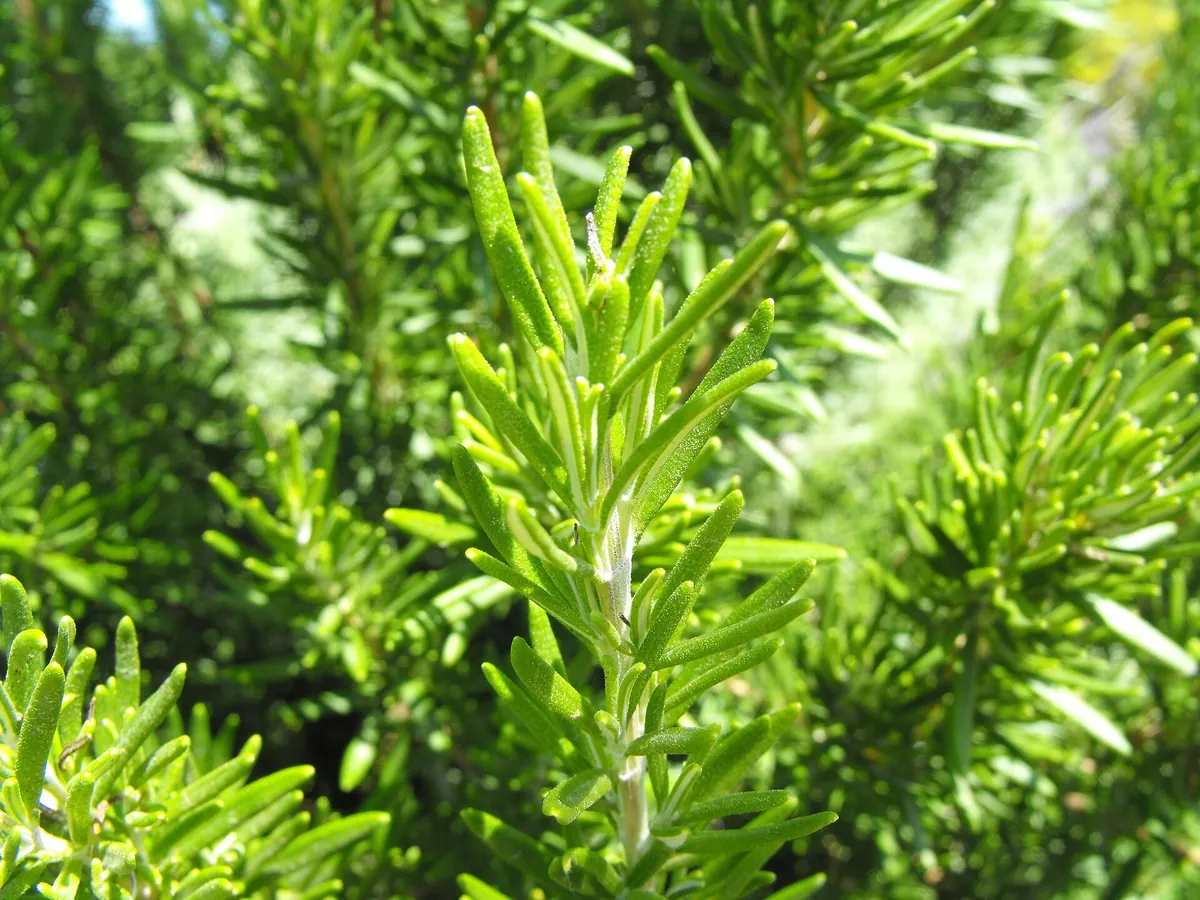
Rosemary at a glance
| Botanical name | Salvia rosmarinus |
|---|---|
| Family | Lamiaceae |
| Other names | Rosmarinus officinalis |
| Plant type | Herb; woody evergreen herb |
| Size | 4 to 5 feet tall, 3 to 4 feet wide in the ground; smaller in pots |
| Light | Full sun (6 or more hours of direct sun) |
| Water | Let the soil dry between waterings. Wet roots are the most common problem. |
| Soil | Well-drained, sandy or gravelly soil. |
| USDA hardiness zones | Hardy outdoors in zones 8 to 10. Elsewhere, grow it in a pot and bring it in before frost. |
| USDA PLANTS symbol | ROOF |
When to plant rosemary
Plant outdoors in spring after the last frost.
Turn these into real dates for your area with the planting calendar.
How to grow rosemary
- Buy a young plant; rosemary is slow from seed.
- Plant in full sun in very well-drained soil or a clay pot.
- Water when the top few inches of soil are dry.
- Snip sprigs as needed; never remove more than a third at once.
- In cold zones, move the pot to a bright, cool window before the first frost.
Water and soil
Water: Let the soil dry between waterings. Wet roots are the most common problem.
Soil: Well-drained, sandy or gravelly soil.
Light: Full sun (6 or more hours of direct sun).
Common problems
- Brown, dry needles indoors
- Indoor plants often suffer from low light or roots that stayed wet or dried out completely. Give bright light and water evenly but sparingly.
- Root rot
- Caused by soggy soil; improve drainage.
Is rosemary safe for cats and dogs?
Non-toxic
Non-toxic
The ASPCA lists Rosemary (Rosmarinus officinalis) as non-toxic to cats and non-toxic to dogs. ASPCA entry.
If a pet chews a plant and you are worried, call your vet or the ASPCA Animal Poison Control Center (888-426-4435; a fee may apply). For people, call Poison Help at 1-800-222-1222. In an emergency, call 911.
Can you eat rosemary?
Leaves are used fresh or dried as a seasoning.
Rosemary questions
Is rosemary safe for cats and dogs?
The ASPCA lists rosemary as non-toxic to cats and dogs.
Can rosemary survive winter outside?
In zones 8 to 10, usually yes. In colder zones it is safer to grow rosemary in a pot and move it indoors before frost.
How often should I water rosemary?
Water when the top few inches of soil are dry. Rosemary prefers to stay on the dry side.
Sources
- NC State Extension Gardener Plant Toolbox: Salvia rosmarinus (size, light, soil, zones, poison rating)
- USDA PLANTS Database profile: Rosmarinus officinalis L. (accepted name)
- ASPCA: Rosemary (pet toxicity)
- ASPCA Animal Poison Control: plants toxic and non-toxic to cats
- ASPCA Animal Poison Control: plants toxic and non-toxic to dogs
Written in our own words from the sources above. See our editorial policy. Spotted a mistake? Tell us.