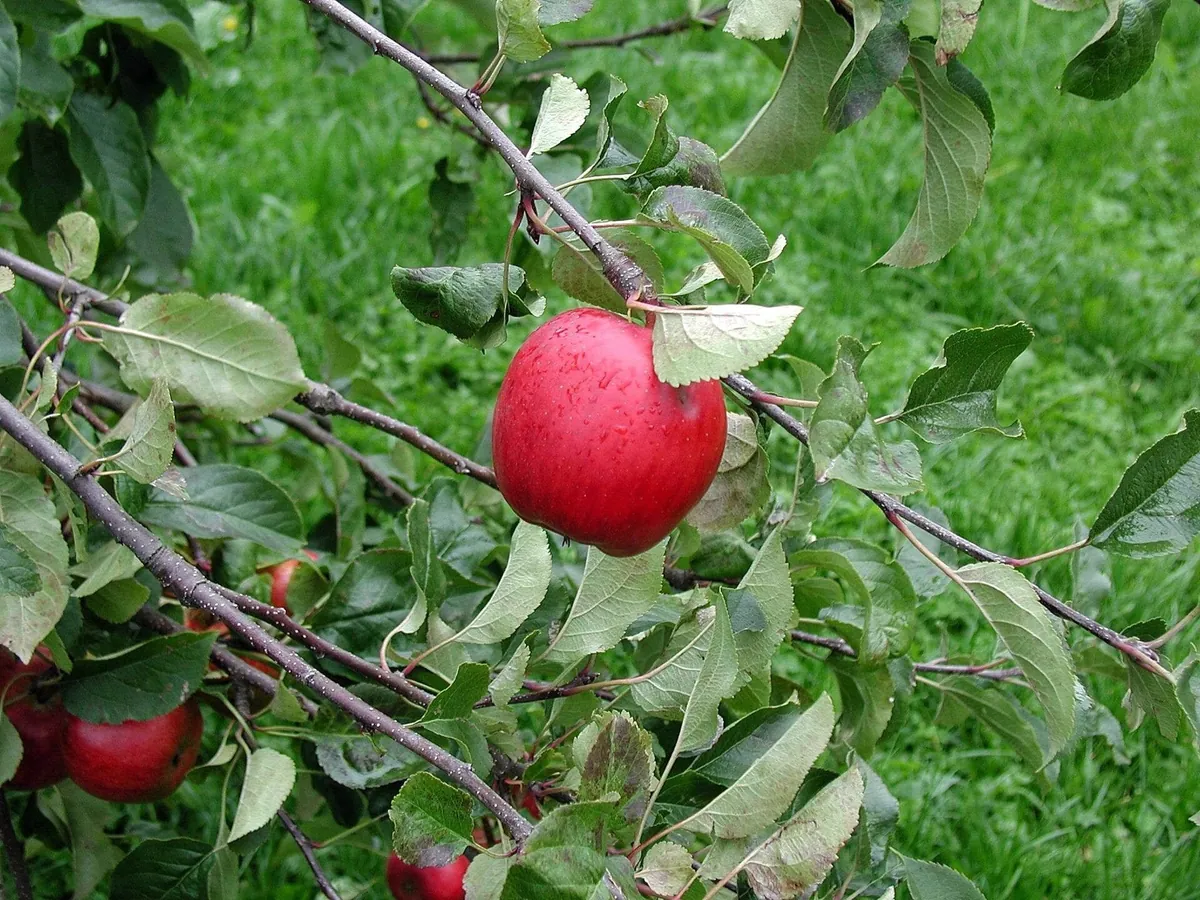
Apple Tree at a glance
| Botanical name | Malus domestica |
|---|---|
| Family | Rosaceae |
| Other names | apple, Malus domestica |
| Plant type | Tree; deciduous fruit tree |
| Size | 15 to 30 feet tall and wide on standard roots; dwarf trees stay far smaller |
| Light | Full sun (6 or more hours of direct sun) |
| Water | Water young trees deeply each week in dry weather. |
| Soil | Well-drained soil; avoid low spots where water stands. |
| USDA hardiness zones | Grown in zones 4 to 9; each variety has its own range and chill needs. |
| USDA PLANTS symbol | MADO4 |
When to plant apple tree
Plant bare-root trees in early spring while dormant.
Turn these into real dates for your area with the planting calendar.
How to grow apple tree
- Pick two varieties that bloom at the same time so they can pollinate each other.
- Plant in full sun with good air flow and drainage.
- Keep the graft union above the soil line.
- Water deeply and mulch, keeping mulch away from the trunk.
- Prune in late winter to open the center to light.
- Thin small fruit in early summer for larger apples.
Water and soil
Water: Water young trees deeply each week in dry weather.
Soil: Well-drained soil; avoid low spots where water stands.
Light: Full sun (6 or more hours of direct sun).
Common problems
- Apple scab
- Dark, scabby spots on leaves and fruit in wet springs. Resistant varieties help most.
- Fire blight
- Shoot tips turn black and bend like a hook. Prune out affected shoots well below the damage in dry weather.
- Codling moth
- Worms in the fruit. Your local extension office can advise on timing controls.
Is apple tree safe for cats and dogs?
Toxic
Toxic
The ASPCA lists Apple (Malus sylvestrus) as toxic to cats and toxic to dogs. Signs it lists include: stems, leaves, seeds contain cyanide, particularly toxic in the process of wilting: brick red mucous membranes, dilated pupils, difficulty breathing. ASPCA entry.
If a pet chews a plant and you are worried, call your vet or the ASPCA Animal Poison Control Center (888-426-4435; a fee may apply). For people, call Poison Help at 1-800-222-1222. In an emergency, call 911.
Can you eat apple tree?
The fruit is eaten fresh or cooked. Seeds, stems and leaves are not food.
Apple Tree questions
Do I need two apple trees?
Most apple varieties need pollen from a different variety that blooms at the same time. A neighbor's tree or a crabapple nearby can also do the job.
Are apple trees toxic to dogs and cats?
The ASPCA lists apple as toxic to cats and dogs because the stems, leaves and seeds contain cyanogenic glycosides. Keep pets from chewing branches and seeds.
How long until an apple tree bears fruit?
Dwarf trees often fruit within a few years of planting; larger trees take longer.
Sources
- NC State Extension Gardener Plant Toolbox: Malus domestica (size, light, soil, zones, poison rating)
- USDA PLANTS Database profile: Malus domestica auct. non Borkh. (accepted name)
- ASPCA: Apple (pet toxicity)
- ASPCA Animal Poison Control: plants toxic and non-toxic to cats
- ASPCA Animal Poison Control: plants toxic and non-toxic to dogs
Written in our own words from the sources above. See our editorial policy. Spotted a mistake? Tell us.