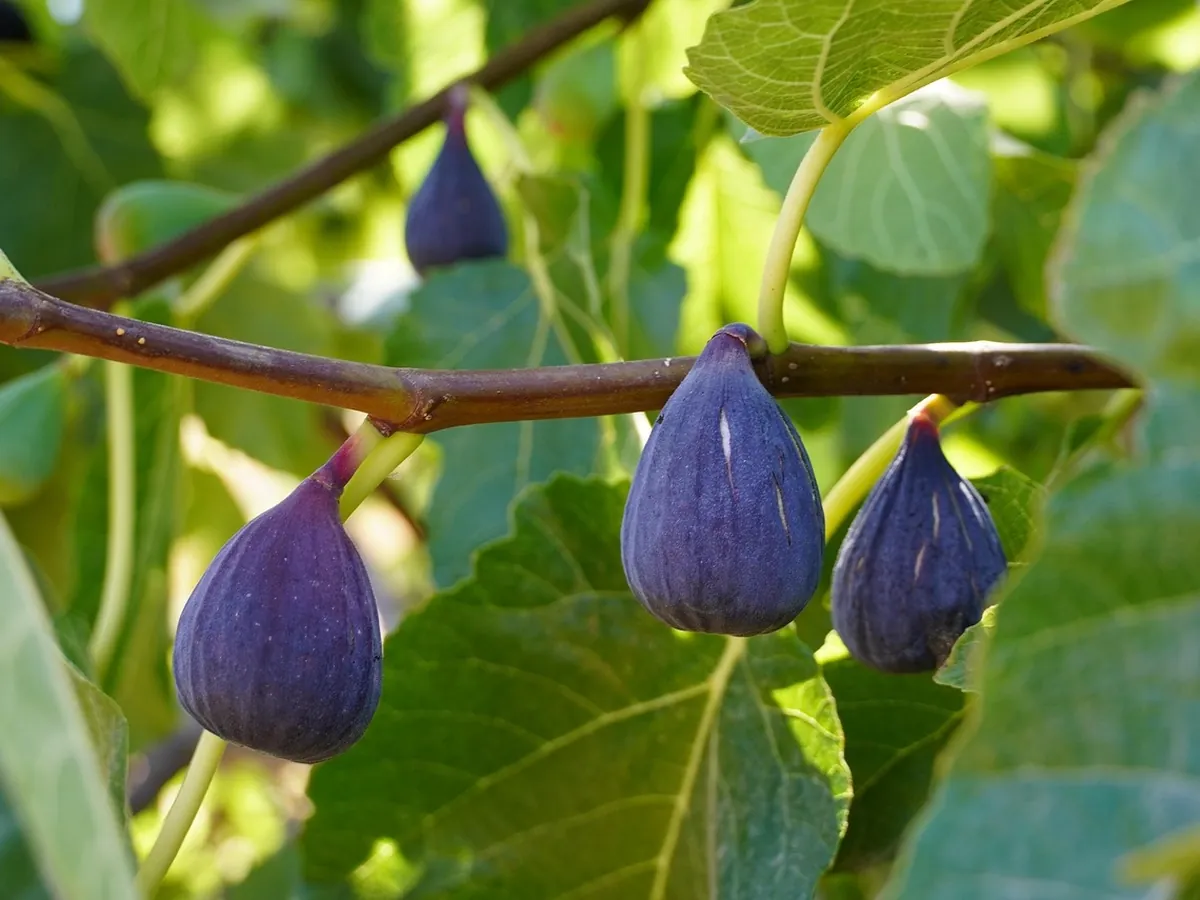
Fig Tree at a glance
| Botanical name | Ficus carica |
|---|---|
| Family | Moraceae |
| Other names | common fig, Ficus carica |
| Plant type | Tree; deciduous fruit tree |
| Size | 10 to 30 feet tall and wide in warm areas; smaller in cold zones or pots |
| Light | Full sun (6 or more hours of direct sun); Part shade (2 to 6 hours of sun) |
| Water | Water deeply in dry spells; even moisture helps fruit develop. |
| Soil | Well-drained soil. |
| USDA hardiness zones | Grown in zones 7 to 10. In zone 7, a sheltered, sunny wall helps. |
| USDA PLANTS symbol | FICA |
When to plant fig tree
Plant in spring after the last frost.
Turn these into real dates for your area with the planting calendar.
How to grow fig tree
- Plant in the warmest sunny spot you have, such as a south-facing wall.
- Water deeply while young and in dry spells.
- Mulch the root zone.
- Prune lightly in late winter to shape.
- Pick figs when they soften and droop slightly on the stem.
Water and soil
Water: Water deeply in dry spells; even moisture helps fruit develop.
Soil: Well-drained soil.
Light: Full sun (6 or more hours of direct sun); Part shade (2 to 6 hours of sun).
Common problems
- Fruit drops before ripening
- Often caused by drought stress or a young tree.
- Winter damage
- Stems can be damaged in hard winters; plants often regrow from the base.
Is fig tree safe for cats and dogs?
Toxic
Toxic
The ASPCA lists Fig (Ficus benjamina) as toxic to cats and toxic to dogs. Signs it lists include: gastrointestinal and dermal irritation. ASPCA entry.
The ASPCA's fig entry covers Ficus.
NC State Extension rates its poison severity for people and animals as low.
If a pet chews a plant and you are worried, call your vet or the ASPCA Animal Poison Control Center (888-426-4435; a fee may apply). For people, call Poison Help at 1-800-222-1222. In an emergency, call 911.
Can you eat fig tree?
The fruit is eaten fresh, dried or cooked. The milky sap can irritate skin in sunlight.
Fig Tree questions
Are fig trees toxic to dogs and cats?
The ASPCA lists fig as toxic to cats and dogs, causing stomach and skin irritation. Keep pets from chewing leaves and branches.
Do fig trees need a second tree to fruit?
Most common fig varieties sold for home gardens set fruit without a pollinator.
Can fig trees grow in pots?
Yes. In cold zones, grow figs in large pots and move them to a cool, sheltered place for winter.
Sources
- NC State Extension Gardener Plant Toolbox: Ficus carica (size, light, soil, zones, poison rating)
- USDA PLANTS Database profile: Ficus carica L. (accepted name)
- ASPCA: Fig (pet toxicity)
- ASPCA Animal Poison Control: plants toxic and non-toxic to cats
- ASPCA Animal Poison Control: plants toxic and non-toxic to dogs
Written in our own words from the sources above. See our editorial policy. Spotted a mistake? Tell us.