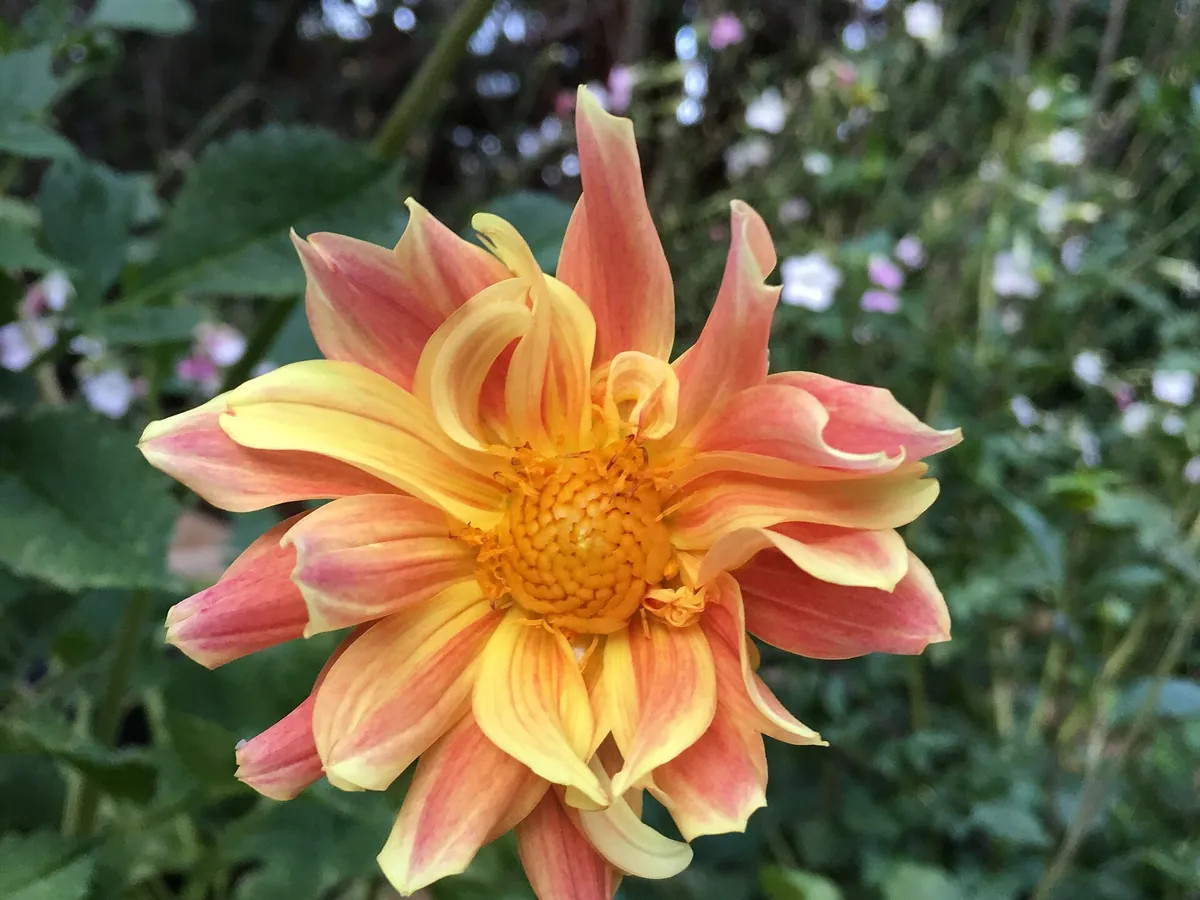
Dahlia at a glance
| Botanical name | Dahlia hybrids |
|---|---|
| Family | Asteraceae |
| Other names | garden dahlia |
| Plant type | Flower; tender perennial grown from tubers |
| Size | 1 to 6 feet tall, 1 to 3 feet wide |
| Light | Full sun (6 or more hours of direct sun) |
| Water | Water deeply once shoots are up; do not water tubers heavily before they sprout. |
| Soil | Well-drained, fertile soil. |
| USDA hardiness zones | Tubers can stay in the ground in zones 7 to 10. In colder zones, dig and store them indoors for winter. |
| USDA PLANTS symbol | DAPI3 |
When to plant dahlia
Plant tubers outdoors after the last frost when the soil has warmed. From seed, start indoors about 8 weeks before the frost-free date.
Turn these into real dates for your area with the planting calendar.
How to grow dahlia
- Plant tubers about 4 to 6 inches deep with the growing eye facing up.
- Set a stake at planting time for tall types.
- Pinch the main shoot once plants are about a foot tall for more stems.
- Water deeply in dry weather and mulch.
- Cut flowers often to keep new blooms coming.
- In cold zones, dig tubers after the first frost and store them cool and dry.
Water and soil
Water: Water deeply once shoots are up; do not water tubers heavily before they sprout.
Soil: Well-drained, fertile soil.
Light: Full sun (6 or more hours of direct sun).
Common problems
- Tubers rot
- Usually from cold, wet soil before shoots appear. Wait for warm soil.
- Slugs and earwigs
- They chew leaves and petals. Hand-pick in the evening.
- Powdery mildew
- White powder on leaves late in the season.
Is dahlia safe for cats and dogs?
Toxic
Toxic
The ASPCA lists Dahlia (Dahlia species) as toxic to cats and toxic to dogs. Signs it lists include: mild gastrointestinal signs, mild dermatitis. ASPCA entry.
NC State Extension rates its poison severity for people and animals as low.
If a pet chews a plant and you are worried, call your vet or the ASPCA Animal Poison Control Center (888-426-4435; a fee may apply). For people, call Poison Help at 1-800-222-1222. In an emergency, call 911.
Can you eat dahlia?
Not grown as food today.
Dahlia questions
Are dahlias toxic to cats and dogs?
The ASPCA lists dahlias as toxic to cats and dogs, with mild stomach upset and skin irritation.
Do I have to dig up dahlias in winter?
In zones 7 to 10, tubers can usually stay in the ground with mulch. In colder zones, dig them after the first frost and store them for spring.
When do dahlias bloom?
From midsummer until the first fall frost.
Sources
- NC State Extension Gardener Plant Toolbox: Dahlia (size, light, soil, zones, poison rating)
- USDA PLANTS Database profile: Dahlia pinnata Cav. (accepted name)
- ASPCA: Dahlia (pet toxicity)
- ASPCA Animal Poison Control: plants toxic and non-toxic to cats
- ASPCA Animal Poison Control: plants toxic and non-toxic to dogs
- Colorado State University Extension: Growing Annual Plants from Seed
Written in our own words from the sources above. See our editorial policy. Spotted a mistake? Tell us.