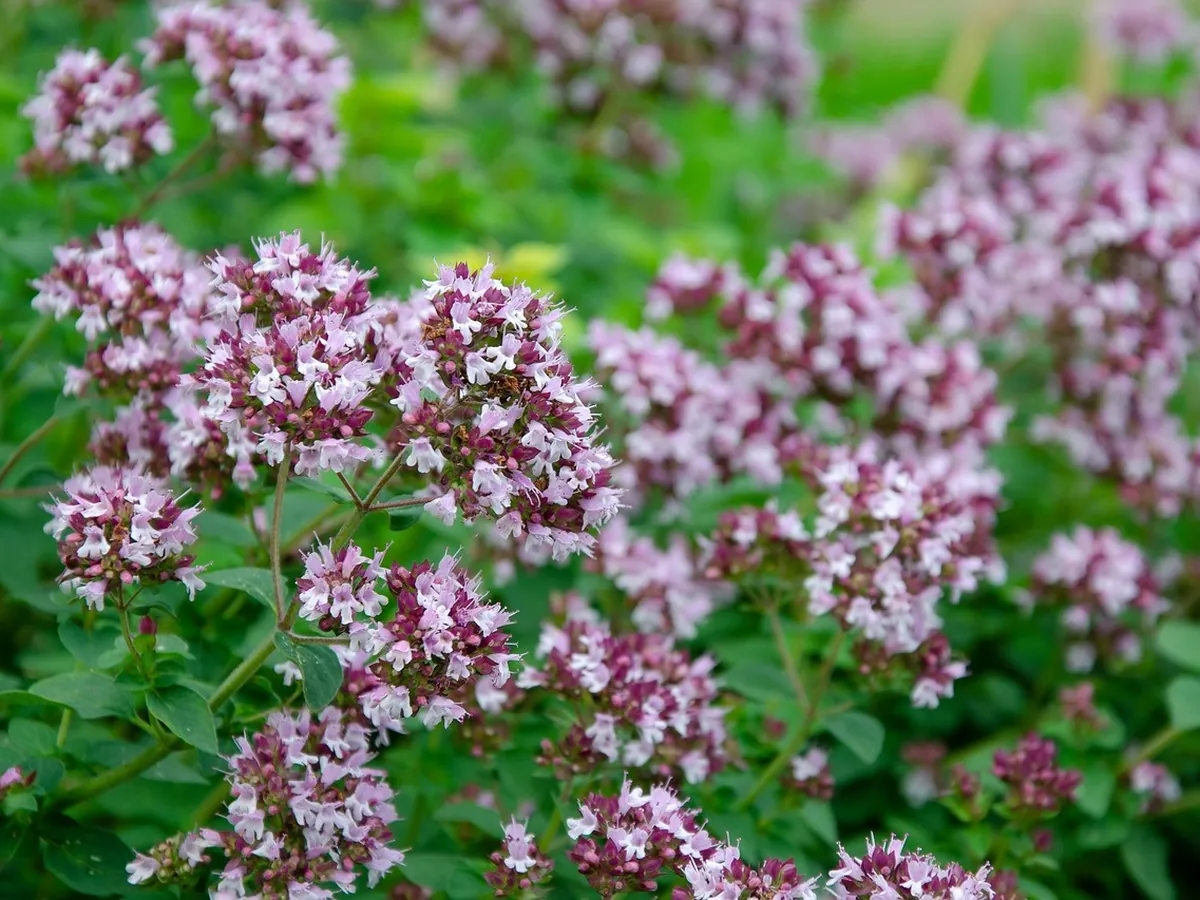
Oregano at a glance
| Botanical name | Origanum vulgare |
|---|---|
| Family | Lamiaceae |
| Other names | wild marjoram, Greek oregano |
| Plant type | Herb; perennial herb |
| Size | 1 to 3 feet tall, 1 to 2 feet wide |
| Light | Full sun (6 or more hours of direct sun); Part shade (2 to 6 hours of sun) |
| Water | Water when the soil is dry; established plants handle drought. |
| Soil | Well-drained soil of average fertility. |
| USDA hardiness zones | Hardy in zones 4 to 8. |
| USDA PLANTS symbol | ORVU |
When to plant oregano
Plant in spring after the last frost.
Turn these into real dates for your area with the planting calendar.
How to grow oregano
- Plant in sun in well-drained soil.
- Water while young plants settle in.
- Pinch tips to keep the plant bushy.
- Harvest leaves just before flowering for the strongest flavor.
- Cut the plant back after flowering for fresh growth.
Water and soil
Water: Water when the soil is dry; established plants handle drought.
Soil: Well-drained soil of average fertility.
Light: Full sun (6 or more hours of direct sun); Part shade (2 to 6 hours of sun).
Common problems
- Leggy growth
- Cut back by about a third after flowering.
- Root rot
- Avoid heavy, wet soil.
Is oregano safe for cats and dogs?
Toxic
Toxic
The ASPCA lists Oregano (Origanum vulgare hirtum) as toxic to cats and toxic to dogs. Signs it lists include: mild vomiting and diarrhea. ASPCA entry.
If a pet chews a plant and you are worried, call your vet or the ASPCA Animal Poison Control Center (888-426-4435; a fee may apply). For people, call Poison Help at 1-800-222-1222. In an emergency, call 911.
Can you eat oregano?
Leaves and flowers are used for tea and flavoring.
Oregano questions
Is oregano toxic to cats and dogs?
The ASPCA lists oregano as toxic to cats and dogs, usually causing mild vomiting and diarrhea.
Does oregano spread?
It spreads slowly into wider clumps and can self-seed, but it is much less invasive than mint.
When should I harvest oregano?
Pick leaves any time, but flavor is strongest just before the plant flowers.
Sources
- NC State Extension Gardener Plant Toolbox: Origanum vulgare (size, light, soil, zones, poison rating)
- USDA PLANTS Database profile: Origanum vulgare L. (accepted name)
- ASPCA: Oregano (pet toxicity)
- ASPCA Animal Poison Control: plants toxic and non-toxic to cats
- ASPCA Animal Poison Control: plants toxic and non-toxic to dogs
Written in our own words from the sources above. See our editorial policy. Spotted a mistake? Tell us.