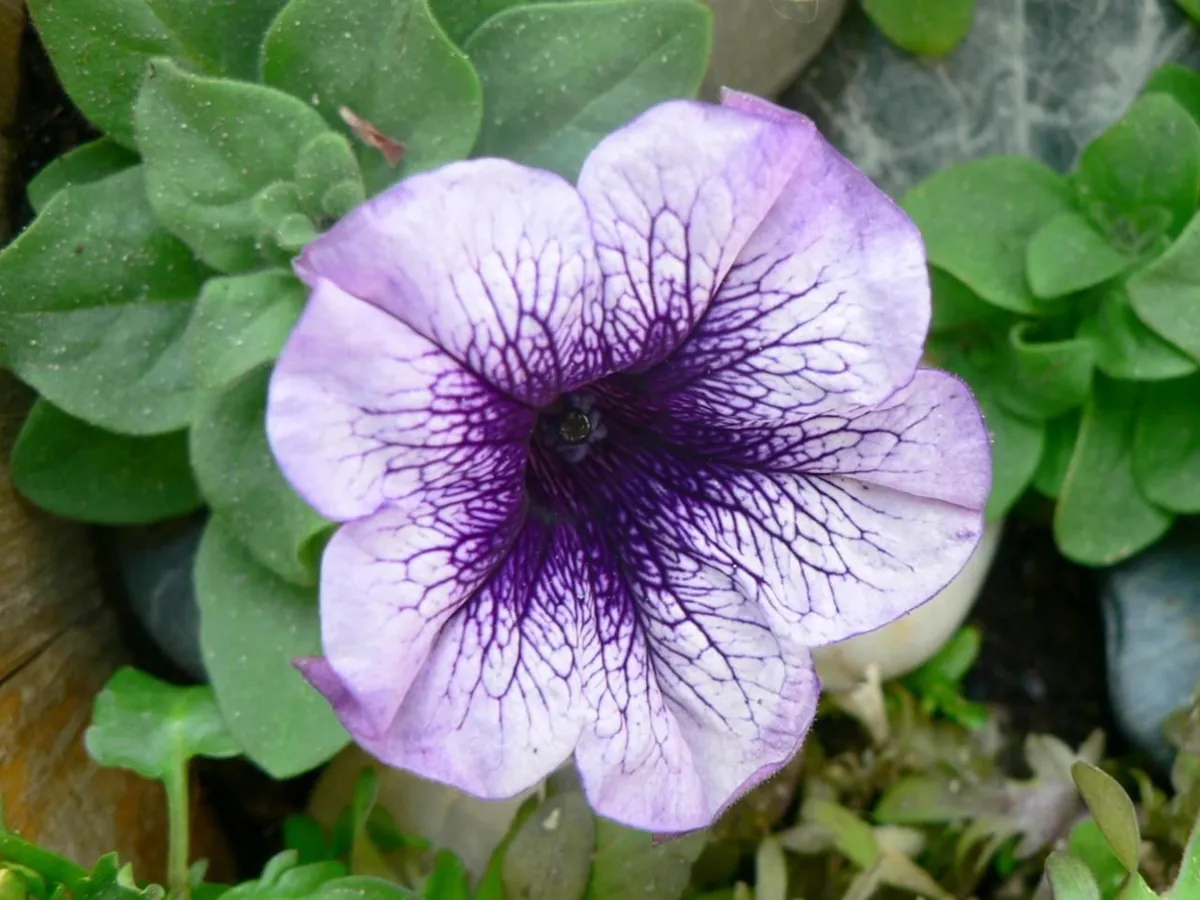
Petunia at a glance
| Botanical name | Petunia × atkinsiana |
|---|---|
| Family | Solanaceae |
| Other names | garden petunia |
| Plant type | Flower; annual (tender perennial) |
| Size | 6 inches to 1.5 feet tall, 1 to 3 feet wide |
| Light | Full sun (6 or more hours of direct sun); Part shade (2 to 6 hours of sun) |
| Water | Water when the top inch of soil is dry; baskets may need daily water in summer. |
| Soil | Well-drained, fertile soil or potting mix. |
| USDA hardiness zones | Grown as a summer annual in most zones; perennial only in zones 10 and 11. |
| USDA PLANTS symbol | PEAT7 |
When to plant petunia
Plant out after the last frost. From seed, start indoors about 8 weeks before the frost-free date.
Turn these into real dates for your area with the planting calendar.
How to grow petunia
- Plant in full sun after the last frost.
- Use rich potting mix for pots and baskets.
- Water regularly and feed every couple of weeks in containers.
- Pinch or trim leggy stems in midsummer.
- Remove faded flowers on older varieties.
Water and soil
Water: Water when the top inch of soil is dry; baskets may need daily water in summer.
Soil: Well-drained, fertile soil or potting mix.
Light: Full sun (6 or more hours of direct sun); Part shade (2 to 6 hours of sun).
Common problems
- Leggy plants
- Trim stems back by a third in midsummer; new growth follows.
- Sticky leaves
- Normal for many petunias; the leaves are naturally a little sticky.
Is petunia safe for cats and dogs?
Non-toxic
Non-toxic
The ASPCA lists Petunia (Petunia species) as non-toxic to cats and non-toxic to dogs. ASPCA entry.
If a pet chews a plant and you are worried, call your vet or the ASPCA Animal Poison Control Center (888-426-4435; a fee may apply). For people, call Poison Help at 1-800-222-1222. In an emergency, call 911.
Can you eat petunia?
Not grown as food.
Petunia questions
Are petunias safe for pets?
The ASPCA lists petunias as non-toxic to cats and dogs.
How often should I water petunias?
In the ground, when the top inch of soil is dry. Hanging baskets often need water every day in hot weather.
Do petunias need full sun?
They flower best with at least 6 hours of sun but tolerate light shade.
Sources
- NC State Extension Gardener Plant Toolbox: Petunia × atkinsiana (size, light, soil, zones, poison rating)
- USDA PLANTS Database profile: Petunia ×atkinsiana D. Don ex Loudon [axillaris × integrifolia] (accepted name)
- ASPCA: Petunia (pet toxicity)
- ASPCA Animal Poison Control: plants toxic and non-toxic to cats
- ASPCA Animal Poison Control: plants toxic and non-toxic to dogs
- Colorado State University Extension: Growing Annual Plants from Seed
Written in our own words from the sources above. See our editorial policy. Spotted a mistake? Tell us.