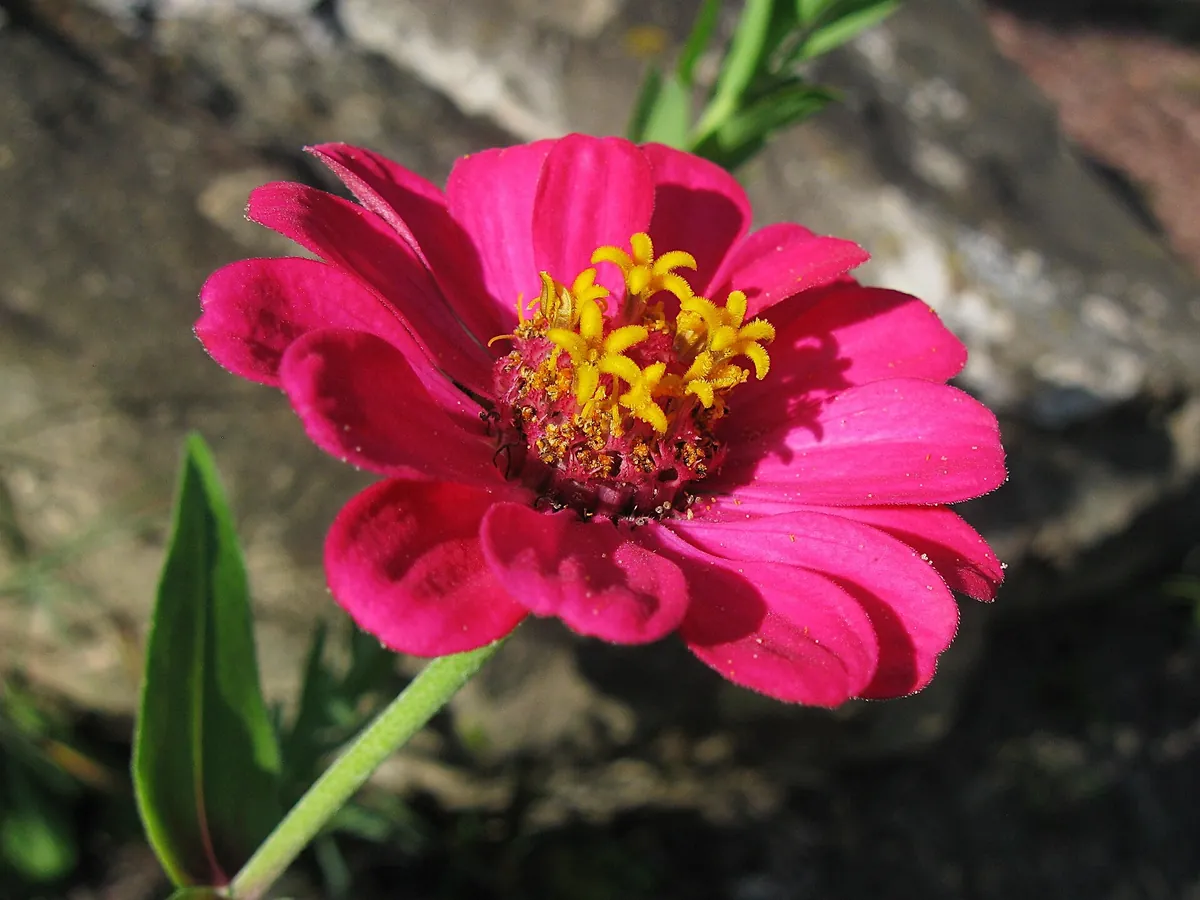
Zinnia at a glance
| Botanical name | Zinnia elegans |
|---|---|
| Family | Asteraceae |
| Other names | common zinnia, youth-and-age |
| Plant type | Flower; annual |
| Size | 6 inches to 3 feet tall, 8 inches to 1 foot wide |
| Light | Full sun (6 or more hours of direct sun) |
| Water | Water at the base when the top inch of soil is dry; wet leaves invite mildew. |
| Soil | Well-drained soil; tolerates dry, average soil. |
| USDA hardiness zones | Grown as a summer annual in every zone. |
| USDA PLANTS symbol | ZIEL |
When to plant zinnia
Sow seeds directly outdoors around your frost-free date, or start indoors about 4 weeks earlier.
Turn these into real dates for your area with the planting calendar.
How to grow zinnia
- Sow seeds about 1/4 inch deep in a sunny spot once the soil is warm.
- Thin seedlings so air moves between plants.
- Water at the base.
- Pinch young plants once to make them branch.
- Cut flowers often; cutting encourages more blooms.
Water and soil
Water: Water at the base when the top inch of soil is dry; wet leaves invite mildew.
Soil: Well-drained soil; tolerates dry, average soil.
Light: Full sun (6 or more hours of direct sun).
Common problems
- Powdery mildew
- White powder on leaves late in summer. Choose resistant varieties and water the soil, not the leaves.
Is zinnia safe for cats and dogs?
Non-toxic
Non-toxic
The ASPCA lists Zinnia (Zinnia species) as non-toxic to cats and non-toxic to dogs. ASPCA entry.
If a pet chews a plant and you are worried, call your vet or the ASPCA Animal Poison Control Center (888-426-4435; a fee may apply). For people, call Poison Help at 1-800-222-1222. In an emergency, call 911.
Can you eat zinnia?
Not grown as food.
Zinnia questions
Are zinnias safe for pets?
The ASPCA lists zinnias as non-toxic to cats and dogs.
Should I start zinnias indoors?
You can start them indoors about 4 weeks before the last frost, but they grow so fast that sowing outdoors in warm soil works very well.
Do zinnias attract pollinators?
Yes. Bees and butterflies visit zinnias, especially varieties with open centers.
Sources
- NC State Extension Gardener Plant Toolbox: Zinnia elegans (size, light, soil, zones, poison rating)
- USDA PLANTS Database profile: Zinnia elegans Jacq. (accepted name)
- ASPCA: Zinnia (pet toxicity)
- ASPCA Animal Poison Control: plants toxic and non-toxic to cats
- ASPCA Animal Poison Control: plants toxic and non-toxic to dogs
- Colorado State University Extension: Growing Annual Plants from Seed
Written in our own words from the sources above. See our editorial policy. Spotted a mistake? Tell us.